A disease impacting almost half of all adults in the US, with no FDA-approved drug therapy1
1. Viso, E. et al, EYE 2011
WHAT IS A PINGUECULA?
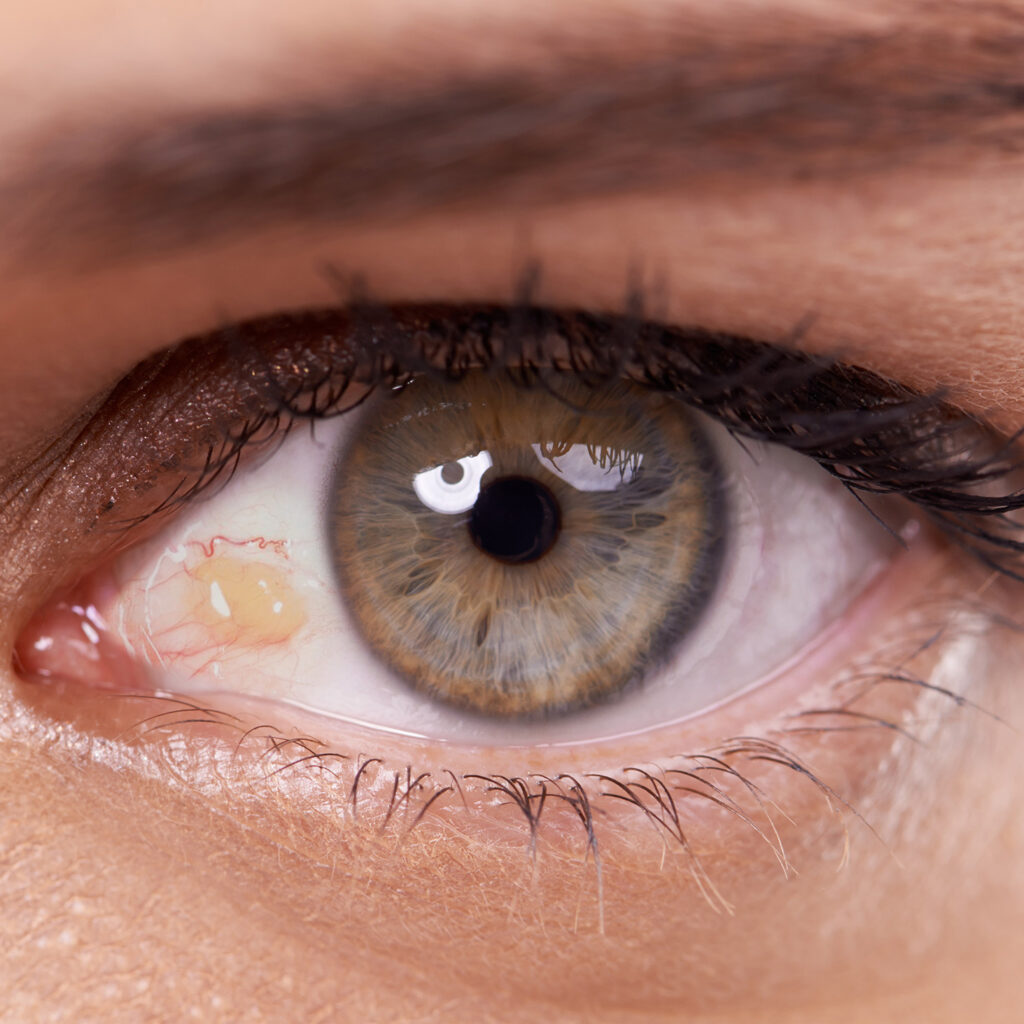
睑裂斑 is characterized as a round, yellowish, elevated growth that develops on the conjunctiva adjacent to the cornea, which is prone to inflammation and vascularization.2
2. Baana, M Journal of the Foundation of Ophthalmology 2025
Who Gets Them?
Pinguecula is most commonly observed in adults with long-term exposure to sunlight, wind, or dusty environments, conditions that contribute to chronic ultraviolet (UV) radiation–related damage of the ocular surface. It tends to occur more frequently in individuals who live or work in sunny climates, including outdoor professionals such as construction workers, farmers, and recreational athletes.
The condition can develop in both men and women and often appears in middle-aged or older adults, though early signs may emerge earlier with cumulative sun exposure. Wearing protective eyewear and maintaining ocular surface hydration can help reduce risk, but once formed, a pinguecula typically persists as a permanent ocular surface change.3
3. Le Q et al, Ophthalmic Epidemiol 2015
Ultraviolet Radiation
Chronic exposure to ultraviolet (UV) light is the leading cause of pinguecula, making individuals in sunny climates and those who spend extended time outdoors more susceptible. The risk increases among people who do not wear UV‑blocking eyewear, allowing greater direct sunlight to reach and damage the ocular surface.
Environment
Environmental conditions such as wind, dust, sand, and smoke contribute to ocular surface irritation and accelerate the degenerative changes that lead to pinguecula. These factors create dryness and micro‑inflammation of the conjunctiva, especially in regions with strong sunlight, arid climates, or high pollution levels.
Chronic Dry Eye
A compromised tear film or chronic dry eye can increase vulnerability to pinguecula by allowing more friction, irritation, and oxidative stress on the conjunctiva. Without adequate lubrication, the ocular surface becomes more susceptible to environmental damage, amplifying the effects of UV exposure and airborne irritants over time.
Disease Burden and Prevalence
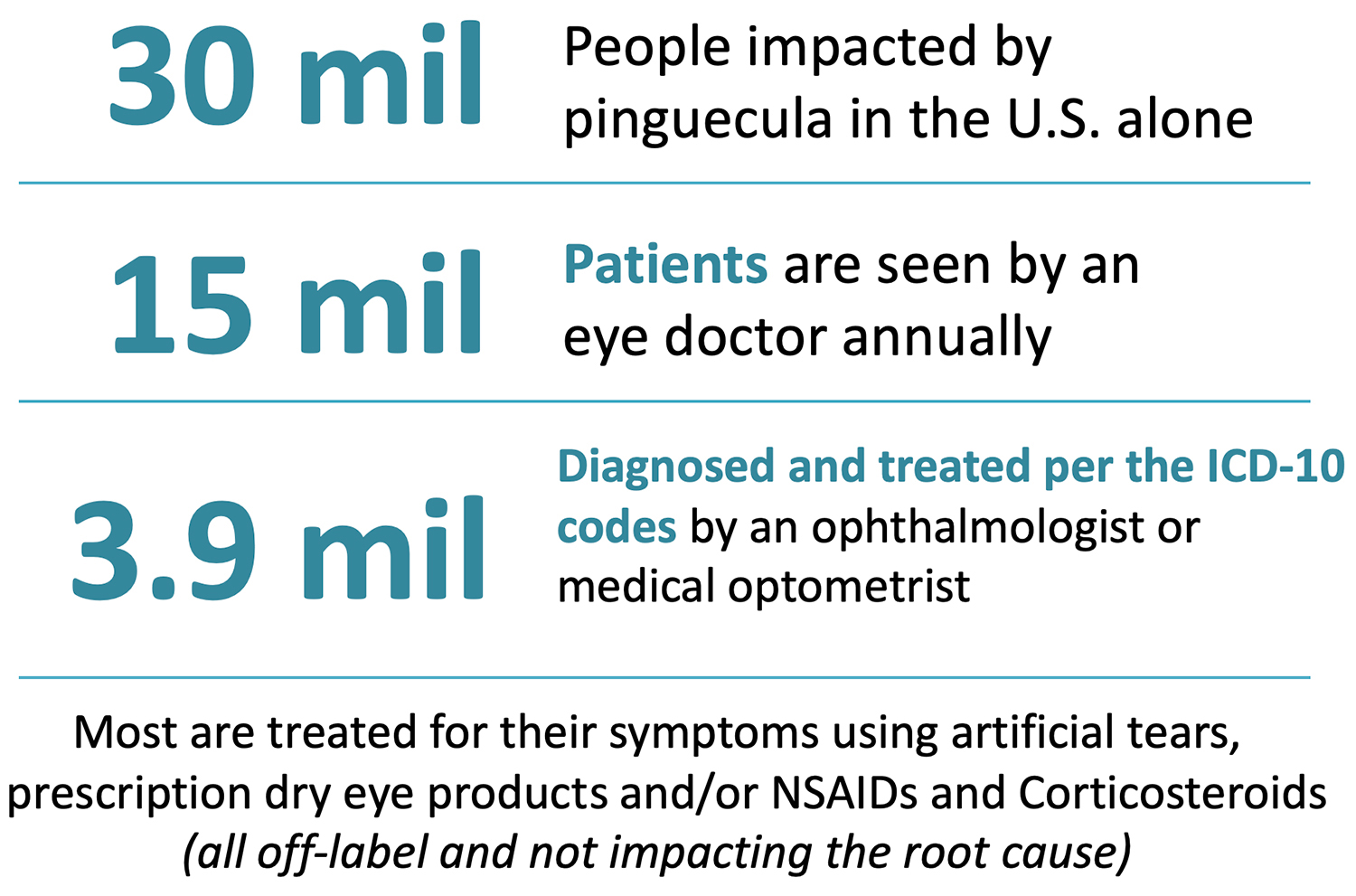
Pinguecula is one of the most common ocular surface findings, affecting an estimated 40–50% of adults worldwide, with similarly high prevalence in the United States. It is frequently underrecognized because many cases are asymptomatic or cause only intermittent irritation, but its widespread presence reflects the cumulative impact of ultraviolet exposure and environmental stress on the conjunctiva. Each year, millions of adults seek eye care for symptoms such as redness, dryness, foreign body sensation, or cosmetic concern related to pinguecula, contributing to substantial utilization of clinical resources even when surgery is not required.4
4. Data on File, Syneos Health, 2025
SYMPTOMS AND DAILY IMPACT
Pinguecula symptoms can range from barely noticeable to persistently bothersome, with gradual effects on comfort, appearance, and daily routines. Many people experience intermittent irritation, a foreign body sensation, or localized redness that can make reading, computer work, or driving less comfortable, especially in dry or air-conditioned environments. Sensitivity to wind, sun, and dust may increase over time, making outdoor activities more irritating and contact lens wear more difficult or unreliable. In addition, the visible yellowish bump on the white of the eye can draw attention, leading some individuals to feel self-conscious in social or professional settings and to worry about how their eyes appear to others.5
5. Somnath, A and Tripathy, K. Pinguecula StatPearls 2023
Cosmetic Concern
Pinguecula-related changes to the eye can be highly visible, leading some people to feel self-conscious about how their eyes look to others, in photos, or during in-person interactions.
Foreign body sensation
Patients may experience a scratchy, gritty, or ‘something in the eye’ feeling, especially with blinking or visual tasks. This can also make contact lens wear less comfortable.
Localized Redness
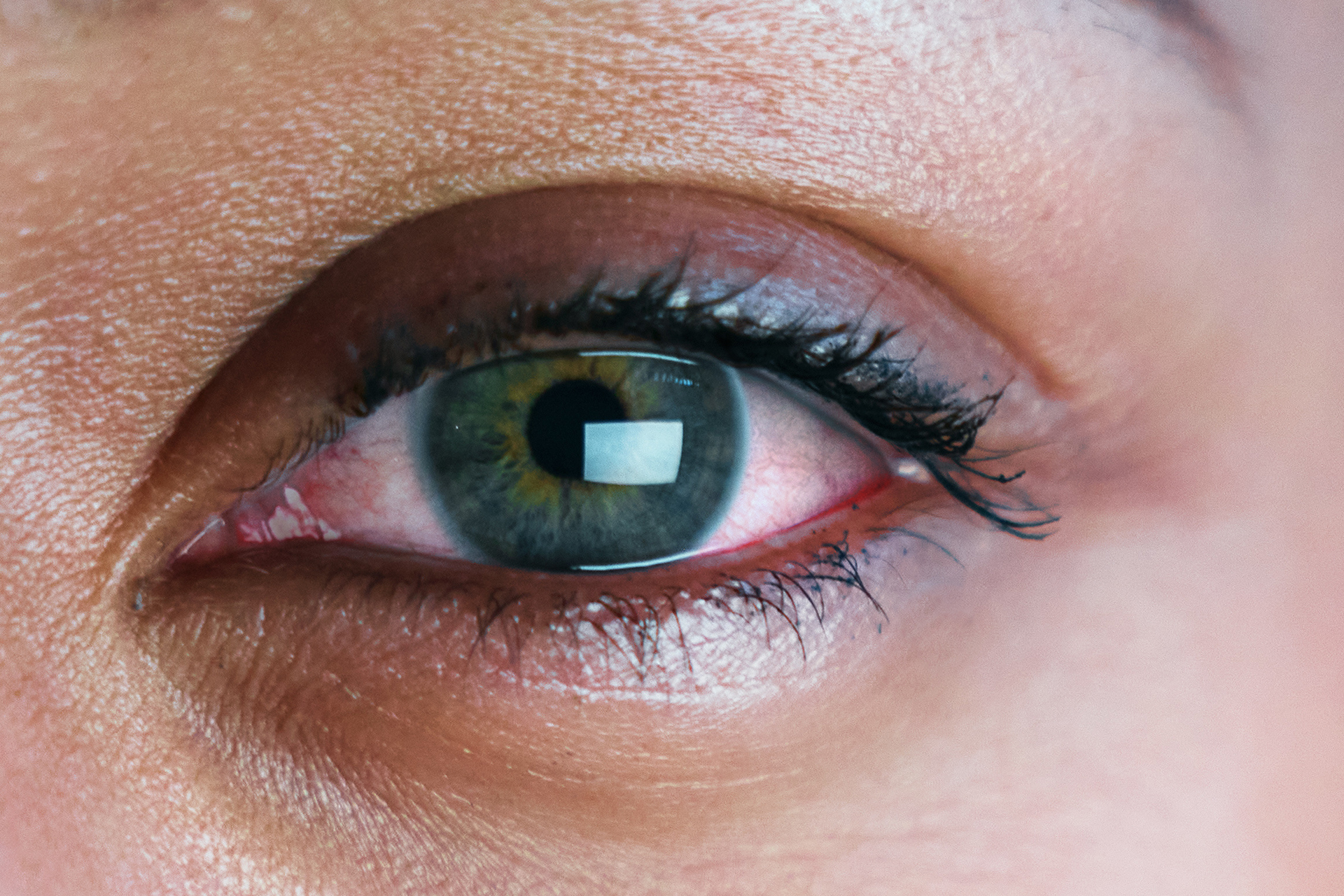
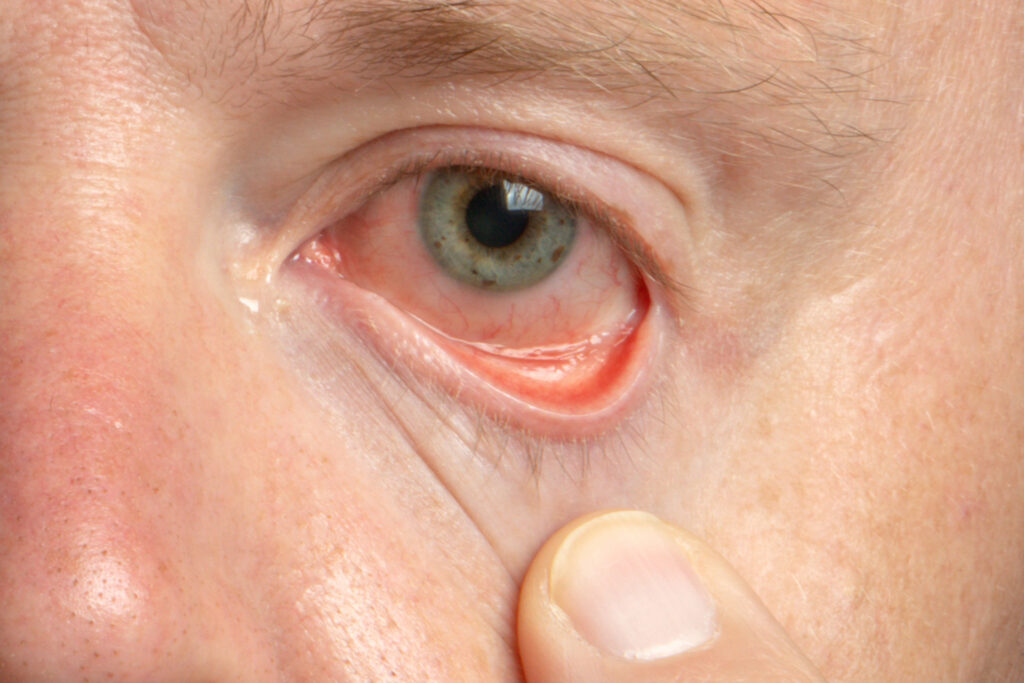
The tissue around a pinguecula may appear red or inflamed, particularly after sun, wind, or dust exposure, drawing attention to the affected eye.
Dryness or burning
By disrupting the tear film, pinguecula can contribute to dryness, stinging, or burning that is often worse in air-conditioned, heated, or low-humidity environments.
DIAGNOSIS:
Pinguecula is often visible as a small, yellowish bump on the white of the eye near the cornea.
Examination by a professional eye doctor is required to diagnose pinguecula.
An eye doctor then uses a slit-lamp exam to confirm the diagnosis and rule out other ocular surface lesions.
6. Beheshtnejad et al, J Ophthalmic Vis Res. 2023
CURRENT STANDARD OF CARE AND ITS LIMITS
Current management of pinguecula is aimed at easing symptoms and controlling surface inflammation rather than eliminating the underlying degenerative change. Lubricating drops, anti-inflammatory medications, and environmental modifications can reduce irritation, but relief is often incomplete and temporary, and the visible lesion typically remains. In more bothersome cases, patients may still struggle with redness, discomfort, or contact lens intolerance, and only a small minority are offered surgery for persistent inflammation or cosmetic concern, underscoring the need for better, targeted therapies.2
2. Baana, M Journal of the Foundation of Ophthalmology 2025
Lubricating eye drops
Artificial tears and gels are often the first-line approach for mild, non-inflamed pinguecula, as an attempt to address dryness, foreign body sensation, and irritation.
NSAIDs – Steroids
Topical anti‑inflammatories, such as short courses of corticosteroids or NSAID drops, are used to address redness and discomfort when the pinguecula is inflamed (pingueculitis).
Surgery
Surgical excision is typically reserved for a minority of cases, usually those with significant, persistent irritation, interference with contact lens wear, or cosmetic concerns, rather than for vision threat (which is more often an issue in pterygium).
PINGUECULA: COMMON AND IMPACTFUL
Most patients with pinguecula also fall into a gap between simple symptom relief and more invasive procedures. Lubricating drops and short courses of anti-inflammatory medications can lessen irritation and redness, but they do not remove the underlying lesion or prevent its persistence on the ocular surface. Because surgery is typically reserved for select cases with significant, ongoing symptoms or cosmetic concerns, many individuals are left to cope long-term with visible changes to the eye, fluctuating discomfort, and limitations in activities such as outdoor exposure and contact lens wear.
Large, global patient population
Pinguecula is one of the most common ocular surface findings in adults, with particularly high prevalence among people who live or work in sunny, high‑UV environments and other settings with chronic environmental exposure.
Chronic degenerative and inflammatory change
Pinguecula reflects chronic degenerative change of the conjunctiva, driven by long‑term ultraviolet exposure, environmental irritants, and ocular surface dryness, and can be intermittently inflamed (pingueculitis).
No disease‑ modifying medical therapy
Existing treatments such as lubricating eye drops and short courses of anti‑inflammatory medications provide symptomatic relief only and do not remove the lesion or reverse the underlying degenerative process.
No approved drug targeting pathophysiology
There are no FDA‑approved pharmacologic therapies specifically for pinguecula; current care remains focused on supportive measures, environmental modification, and, in select cases, surgery for persistent symptoms or cosmetic concerns.
Cloudbreak Pharma:
First Pharmacologic Approach to Target Pinguecula’s Root Cause
Why This Matters to People with Pinguecula, Professionals & Investors
Pinguecula is a chronic, symptomatic ocular surface disease that can affect comfort, appearance, and daily functioning for millions of adults, and it is more than a cosmetic concern. Framing pinguecula as a true disease state, rather than an incidental finding, highlights its impact on patients, the demands it places on clinical practice, and the broader burden on healthcare systems and payers.
For patients, this means ongoing irritation, redness, and lifestyle limitations, often without a durable treatment option. For eye care professionals, it represents a frequent, recurring reason for visits that is managed largely with short-term symptomatic measures. For investors, the large, underserved patient population and lack of disease‑modifying therapies point to a meaningful opportunity for innovation.
At Cloudbreak Pharma, we are advancing late‑stage drug candidates specifically designed to intervene earlier in this disease, with the goal of reducing symptoms, stabilizing the ocular surface, and ultimately decreasing the need for procedural or surgical interventions over time.
People with Pinguecula
Find out more about the causes of pinguecula and current management options.